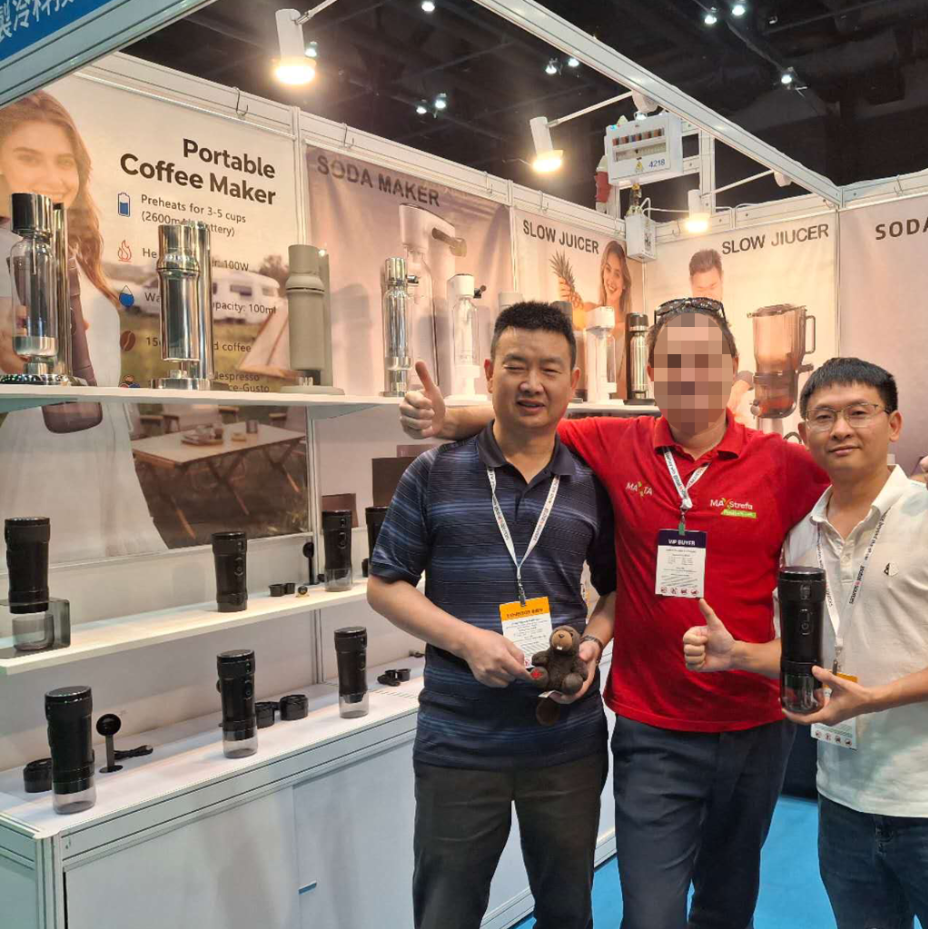

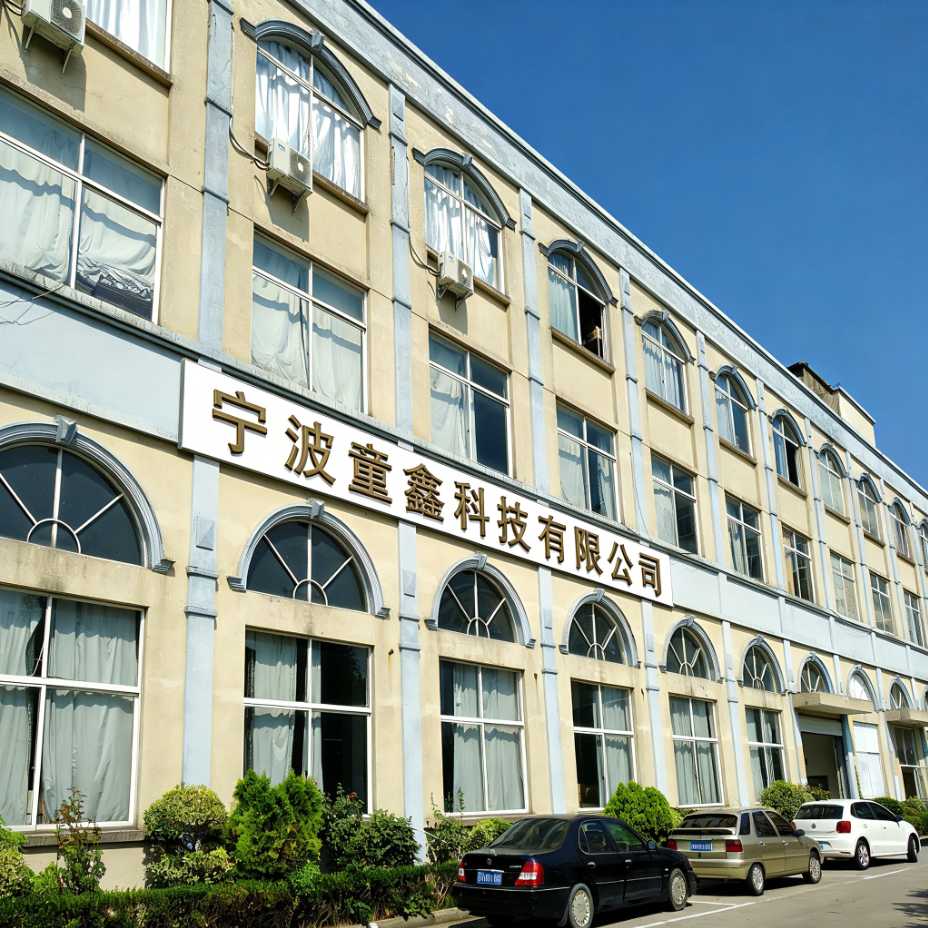
Ningbo Tongxin Technology Co., Ltd. is a BSCI coffee machine manufacturer in China, specializing in rechargeable portable coffee makers and compact capsule coffee machines for international OEM and private-label customers.
Our factory completed the amfori BSCI social compliance audit in August 2026. The audit provides international buyers with additional information about our working conditions, workplace safety, employee management and responsible manufacturing practices.
As a BSCI-audited coffee machine factory operating under an ISO 9001 quality management system, we support buyers that require product quality control, compliance documentation and a structured supplier-approval process.
Why Choose a BSCI Coffee Machine Manufacturer?
Choosing a BSCI coffee machine manufacturer allows buyers to include independently assessed social compliance information in their supplier-evaluation process. Product quality, technical capability and market-specific compliance should still be evaluated separately.
The BSCI on-site audit of Ningbo Tongxin Technology was conducted on August 27, 2026, at our coffee machine factory in Cixi, Ningbo, Zhejiang, China.
Following the on-site assessment, the official audit report was issued. Our factory is now able to provide qualified customers with relevant BSCI audit information for supplier evaluation and active business projects.
The audit covered the factory management and working environment behind our coffee machine production. It was a factory-level social compliance assessment rather than a test or certification for an individual coffee maker.
Preparing for the audit required cooperation between our management, administration, production, quality control, engineering and warehouse teams.
What Is an amfori BSCI Audit?
The amfori Business Social Compliance Initiative, commonly known as amfori BSCI, provides a framework for assessing social compliance within global supply chains.
A BSCI audit helps buyers understand how a factory manages working conditions and responsible business practices.
The assessment may cover areas such as:
- Employee rights
- Working hours
- Wages and benefits
- Occupational health and safety
- Employment records
- Workplace conditions
- Management systems
- Ethical business conduct
- Environmental protection
- Employee communication
- Grievance procedures
- Responsible recruitment practices
During an audit, the auditor may review factory records, inspect production and employee areas and assess how relevant management procedures are implemented.
The audit provides buyers with additional information for supplier evaluation. It does not replace product testing, quality inspections or market-specific compliance requirements.
Why Coffee Machine Buyers Require BSCI Audits
International brands, retailers, importers and distributors often evaluate more than product price and technical specifications when selecting a coffee machine supplier.
Their supplier-approval process may also cover:
- Factory ownership and legal registration
- Manufacturing capabilities
- Production capacity
- Quality-management systems
- Working conditions
- Employee health and safety
- Social compliance
- Product-testing documentation
- Supply-chain management
- Environmental practices
- Corrective-action procedures
- After-sales support
For some companies, a social compliance audit is required before a manufacturer can be included in an approved supplier system.
Other buyers use BSCI audit information as one part of a broader evaluation that also includes product samples, factory inspections, quality-control procedures, compliance documents and commercial terms.
Working with a BSCI-audited coffee machine factory helps buyers obtain independently assessed information about the factory’s social compliance management.
However, BSCI audit status alone does not guarantee product quality, delivery performance or compliance with the regulations of a specific market. These areas must be evaluated separately.
How We Prepared for the BSCI Audit
Preparing for the BSCI audit involved both document review and practical factory management.
Our preparation included:
- Reviewing employee and employment records
- Checking attendance and working-hour information
- Reviewing wage and benefit records
- Inspecting fire-safety equipment
- Checking emergency exits and evacuation routes
- Reviewing workplace safety signs
- Checking personal protective equipment
- Organizing employee training records
- Inspecting production and warehouse areas
- Reviewing health and safety procedures
- Clarifying departmental responsibilities
- Improving internal management records
- Correcting issues identified during internal inspections
The preparation was not limited to one person or department. Employees and managers across the factory participated in the process while continuing their normal production responsibilities.
Accurate documentation was important, but the audit also required the factory to demonstrate how relevant procedures were implemented in daily operations.
Completing the On-Site Assessment
During the on-site assessment, the auditor reviewed relevant documents and inspected the factory’s production and working areas.
Our team provided the requested information and explained how employee management, workplace safety and daily factory operations were organized.
The assessment gave us an opportunity to review our management practices from an independent perspective. It also helped identify areas where documentation, responsibilities, training or workplace arrangements could be improved.
The official audit report has now been issued. Qualified international buyers with active sourcing or OEM projects may contact our team to discuss their supplier-compliance requirements.
What the BSCI Audit Means for OEM Customers
For an OEM or private-label buyer, BSCI audit information can form part of the supplier-approval process.
It can help purchasing and compliance teams evaluate whether a potential manufacturer has established practices covering:
- Workplace health and safety
- Employee management
- Working-time records
- Factory organization
- Management responsibilities
- Internal documentation
- Responsible business conduct
- Continuous improvement
This information is especially relevant to established brands, retail chains, distributors and importers that include social compliance in their supplier assessment procedures.
Buyers should combine the BSCI audit information with an evaluation of:
- Product samples
- Technical specifications
- Production capabilities
- Quality-control procedures
- Compliance documents
- Packaging requirements
- Delivery arrangements
- Warranty and after-sales support
Our European private-label portable coffee maker project provides an example of our customized production capabilities. The customer initially ordered 2,000 units with customized product logos, retail packaging and user manuals, followed by a repeat order for 4,000 units.
Working with a BSCI coffee machine manufacturer can help established brands and retailers complete the social compliance section of their supplier assessment.
BSCI Audit and Product Certification Are Different
A BSCI audit is not a coffee machine product certification.
BSCI focuses on social compliance, working conditions and factory-management practices. Product testing evaluates the construction, materials, electrical functions and performance of a particular coffee machine.
The following requirements serve different purposes.
BSCI Audit
A BSCI audit evaluates factory working conditions, employee management, workplace safety and social compliance practices.
It should not be described as a coffee machine safety certificate or product certification.
ISO 9001
ISO 9001 provides a framework for managing quality-related processes and continuous improvement within the factory.
Ningbo Tongxin Technology operates under an ISO 9001 quality management system.
CE-EMC
CE-EMC testing addresses electromagnetic compatibility requirements for relevant electrical and electronic products.
The availability and applicability of existing reports depend on the coffee machine model and its final configuration.
RoHS
RoHS addresses restrictions on certain hazardous substances in electrical and electronic products.
LFGB
LFGB-related testing may be used to evaluate relevant food-contact materials for the German or European market.
UN38.3
UN38.3 covers transportation testing requirements for lithium batteries and battery packs.
It is particularly relevant to rechargeable portable coffee makers containing lithium-ion batteries.
MSDS
An MSDS provides relevant safety information about battery materials, handling, storage and transportation.
The exact documents required for a coffee maker depend on the product, electrical configuration, battery, materials, destination country and sales channel.
Buyers should confirm their compliance requirements before ordering. Major changes to electrical components, batteries, materials or product construction may affect the applicability of existing reports.
Coffee Machine Quality Control and Responsible Manufacturing
Social compliance and product quality are separate areas, but both depend on clear responsibilities, accurate records and consistent implementation.
Our coffee machine quality control process may include:
- Incoming component inspection
- First-article confirmation
- Assembly-process inspection
- Electrical and control-function testing
- Heating-performance testing
- Pump and extraction testing
- Water-flow inspection
- Water-leakage testing
- Battery and charging checks
- Appearance inspection
- Logo and label verification
- Packaging inspection
- Final inspection before shipment
Learn more about our portable coffee maker design verification procedures, including heating, extraction, battery, leakage and functional evaluation.
Different coffee machine models require different inspection items.
For a rechargeable portable coffee maker, inspections may cover the battery, charging system, heating module, water pump, control board, capsule holders, ground-coffee basket, seals, buttons and indicator lights.
For a countertop capsule coffee machine, inspections may focus on electrical functions, heating performance, pump operation, beverage volume, capsule compatibility, water flow and leakage.
Ningbo Tongxin Technology performs 100% inspection before shipment according to the confirmed product specifications and order requirements.
For private-label production, inspectors also verify that product logos, labels, packaging, user manuals and accessories correspond with the approved artwork and order details.
Portable Coffee Maker Manufacturing
Our portable coffee maker range includes rechargeable and self-heating models for travel, camping, driving, offices, hotels and outdoor use.
The CM1001B-PLUS 3-in-1 portable coffee maker is compatible with:
- Nespresso® Original-style capsules
- Dolce Gusto®-style capsules
- Ground coffee
Its standard configuration includes a 10.8V/2,600mAh rechargeable battery, a 12V/100W heating system, a 20-bar pump and a 100ml water tank.
The machine can heat cold water internally. It can also extract coffee directly when prepared hot water is added.
The CM1001B-PRO 2-in-1 portable coffee maker provides a more compact configuration compatible with Nespresso® Original-style capsules and ground coffee.
Buyers can request a portable coffee maker sample to evaluate product appearance, heating, extraction, coffee compatibility, charging and user experience before confirming an order.
Capsule Coffee Machine Manufacturing
Our capsule coffee machine range includes compact countertop models for homes, offices, hotels, serviced apartments and retail markets.
The CM2001 3-in-1 capsule coffee maker is compatible with:
- Nespresso® Original-style capsules
- Dolce Gusto®-style capsules
- Ground coffee
It features a 20-bar pump, a removable 0.9L water tank and multiple beverage-volume options.
When evaluating a capsule coffee machine, buyers should consider:
- Required capsule systems
- Ground-coffee compatibility
- Pump pressure
- Heating power
- Water-tank capacity
- Beverage-volume settings
- Machine dimensions
- Target-market voltage
- Compliance requirements
- Packaging and branding
Sample evaluation is recommended before mass production, particularly when a project includes custom packaging, market-specific labeling or private-label branding.
OEM and Private-Label Coffee Machine Manufacturing
Ningbo Tongxin Technology provides OEM and private-label coffee machine manufacturing services for:
- Importers
- Distributors
- Retailers
- Coffee brands
- Small-home-appliance brands
- E-commerce sellers
- Hotel suppliers
- Automotive accessory companies
- Outdoor and travel brands
- Corporate gift companies
Available services may include:
- Customized product logos
- Customized product colors
- Private-label branding
- Custom retail packaging
- Custom user manuals
- Rating labels
- Barcodes
- Outer-carton shipping marks
- Accessory configuration
- Carrying bags for selected models
- Product-configuration evaluation
- Sample preparation
- Production quality control
- Pre-shipment inspection
- Spare-parts support
The standard MOQ for complete OEM customization is generally 1,000 units.
Special colors, exclusive accessories, structural modifications or new technical functions may require a different MOQ, additional tooling or separate development costs.
Before preparing an OEM quotation, buyers should provide:
- Company name
- Target country
- Main sales channel
- Required coffee machine model
- Estimated first-order quantity
- Estimated annual quantity
- Logo requirements
- Packaging requirements
- Required compliance documents
- Delivery destination
This information allows our team to recommend a suitable model and prepare a more accurate project proposal.
Continuous Improvement After the Audit
Completing a BSCI audit is not the end of responsible factory management.
Working conditions, safety procedures, employee records and internal systems must be maintained as part of normal daily operations.
Our continuing work includes:
- Maintaining workplace safety inspections
- Reviewing emergency equipment and exits
- Organizing employee training
- Monitoring relevant employment records
- Following internal management procedures
- Reviewing improvement areas
- Clarifying departmental responsibilities
- Maintaining production and warehouse organization
- Updating documents when necessary
- Supporting future customer or third-party assessments
An audit reflects factory conditions during a specific assessment period. Maintaining responsible practices requires continuous work after the assessment has been completed.
Supporting International Coffee Machine Buyers
Different customers have different supplier-approval requirements.
A European retail brand may require BSCI audit information, quality-management documents, product test reports and detailed packaging information.
An importer may focus on compliance documentation, stable quality, delivery performance, shipping documents and repeat-order production.
A private-label brand may require product samples, customized logos, retail packaging, user manuals and clear approval procedures before production.
Our role as an OEM coffee machine manufacturer is to understand these requirements before an order is confirmed and coordinate the product, artwork, quality and production information throughout the project.
The BSCI audit provides another important part of the supplier information available to qualified international buyers.
Frequently Asked Questions
Is Ningbo Tongxin Technology a BSCI-audited coffee machine manufacturer?
Yes. Ningbo Tongxin Technology has completed the amfori BSCI social compliance audit, and the official audit report has been issued.
Can customers request the BSCI audit report?
Qualified customers with active sourcing, supplier-approval or OEM projects can contact our team to discuss access to the relevant audit information.
Is BSCI a coffee machine product certification?
No. BSCI evaluates factory social compliance, working conditions and management practices. It does not replace electrical safety, EMC, RoHS, food-contact or battery testing.
Does a BSCI audit guarantee product quality?
No. Social compliance and product quality are evaluated separately. Buyers should also review product samples, specifications, quality-control procedures and relevant product reports.
What types of coffee machines does Tongxin manufacture?
We manufacture rechargeable portable coffee makers and compact capsule coffee machines, including products compatible with different capsule systems and ground coffee.
Does Tongxin provide OEM and private-label production?
Yes. We support customized logos, colors, packaging, user manuals, labels and selected product configurations according to the model and order quantity.
What is the standard OEM MOQ?
The standard MOQ for complete OEM customization is generally 1,000 units. Special requirements are evaluated separately.
Can buyers order samples before mass production?
Yes. Buyers can request a coffee machine sample before confirming a wholesale or private-label order.
Which compliance documents are available?
Available documents depend on the product model and may include CE-EMC, RoHS, LFGB, UN38.3 and MSDS. Buyers should confirm the documents required for their destination market.
What information is required for a quotation?
Please provide your company name, target country, sales channel, required product, estimated quantity, branding requirements and delivery destination.
Contact a BSCI-Audited Coffee Machine Manufacturer
Ningbo Tongxin Technology is a BSCI coffee machine manufacturer in China, supplying portable coffee makers and compact capsule coffee machines to international brands, importers, distributors and retailers.
We support product samples, OEM logos, customized packaging, user manuals, production quality control and private-label manufacturing.
Request a sample or OEM quotation with your company information, target market, preferred product, estimated quantity and customization requirements.
Company Information
Company: Ningbo Tongxin Technology Co., Ltd.
Main Products: Portable Coffee Makers, Capsule Coffee Machines and Home Coffee Machines
Services: OEM, ODM, Wholesale and Private-Label Manufacturing
Address: No. 17 West Street, Industrial Park West Area, Guanhaiwei Town, Cixi, Ningbo, Zhejiang, China
Website: www.coffeemachinefactory.com
Email: simonxiong@coffeemachinefactory.com