
Two portable coffee makers can look almost identical and still have very different prices. Most of that difference is inside the machine.
The heater, water pump and battery pack account for a large part of portable coffee maker cost. They affect how quickly the machine heats water, how well it extracts coffee, how many cups it can make and how long it lasts.
Before comparing quotations, it is worth checking these three components.
Quick Comparison of the Main Components
| Component | Lower-Cost Option | Higher-Performance Option | Main Difference |
|---|---|---|---|
| Heater | PI heating film | Thick-film heater | Heating efficiency, sealing and service life |
| Water pump | Low-pressure 370-class pump | 3050-class high-pressure pump | Extraction pressure, stability and service life |
| Battery | Low-discharge 18650 cells | 2,600 mAh, 5C cells | Current output, heating performance and battery life |
A lower-cost machine may still heat water and brew coffee. The real question is whether it can continue to perform reliably after repeated use.
1. Heating Element
The heating element converts electrical energy from the battery into heat and transfers that heat to the water.
Space and battery capacity are both limited inside a portable coffee maker. The heating method therefore has a direct effect on heating time, power consumption and product life.
Three types of heating elements are commonly used.
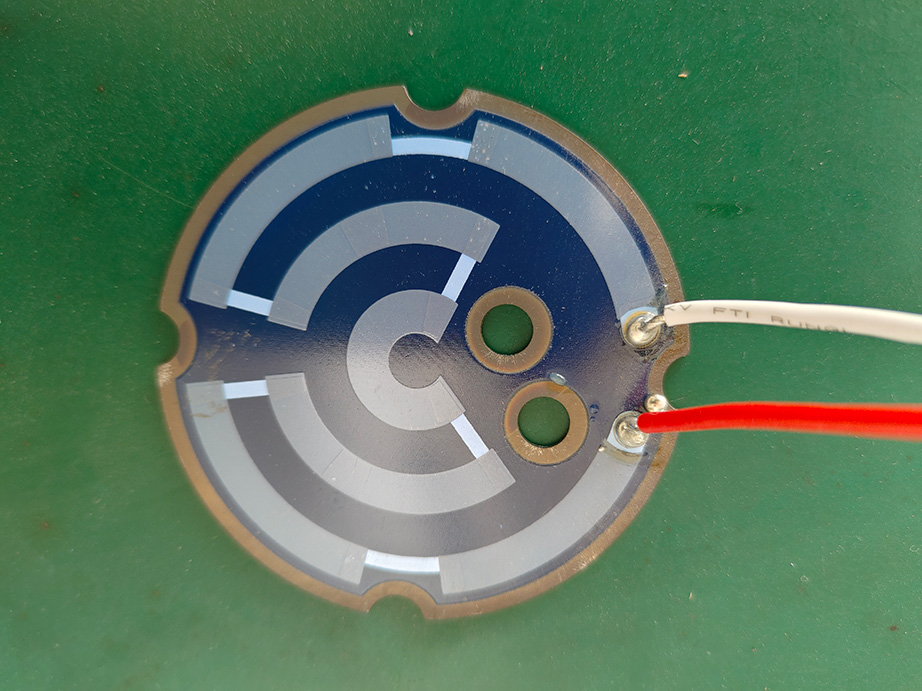
Thick-Film Heater
A thick-film heater is made by printing a specially formulated resistive paste onto a substrate and firing it at high temperature to create a continuous resistive circuit.
When current passes through the resistive layer, electrical energy is converted directly into heat. The substrate then transfers that heat to the water channel or heating chamber.
Advantages:
- Fast heat transfer;
- Low thermal inertia;
- High heating efficiency;
- Fast response to temperature control;
- Compact structure;
- Long service life when properly designed and sealed.
Disadvantage:
- Higher cost.
A thick-film heater works well in a portable coffee maker that needs to heat cold water. It can provide relatively high power from a small heating area.
Our CM1001B-PLUS portable coffee maker uses a 12 V / 100 W thick-film heating system, so users do not need to prepare hot water with a separate kettle.
PTC Ceramic Heating Element
A PTC heater uses positive temperature coefficient ceramic material. As its temperature rises, its resistance increases and its power gradually falls.
The PTC element normally heats a stainless-steel container or another metal component, which then transfers the heat to the water.
Advantages:
- Medium cost;
- Some self-regulating temperature characteristics;
- Lower risk of overheating;
- Better tolerance of some abnormal heating conditions.
Disadvantages:
- More thermal resistance between the heater and the water;
- Slower heating;
- Slower response to temperature changes;
- Lower temperature-control accuracy without additional sensors and control;
- Power falls as the temperature rises;
- Difficult to maintain high-power heating in a compact structure.
The self-regulating characteristic can improve safety, but it does not replace temperature sensors, thermal fuses or other protective devices.
PTC can be used when heating speed is not the main priority. Its limitations become more noticeable when a small battery needs to heat water quickly and maintain a relatively stable extraction temperature.
PI Heating Film
A PI heating film normally consists of an etched nickel-chromium or copper-nickel resistance circuit placed between two layers of polyimide insulating film.
When current passes through the metal circuit, it produces heat.
Advantages:
- Relatively low cost;
- Thin and lightweight;
- Can fit curved or irregular surfaces;
- Quick heating and cooling.
Disadvantages:
- Requires reliable sealing;
- Repeated heating and cooling can age the insulation, adhesive and electrical connections, which may eventually loosen;
- Long-term exposure to heat and moisture may reduce reliability;
- Service life varies significantly with material quality and manufacturing process.
PI heating film can be useful when size, weight and initial cost are the main concerns. However, a coffee maker contains hot water and steam, so sealing and electrical insulation need careful evaluation.
Heater Comparison
| Item | Thick-Film Heater | PTC Ceramic Heater | PI Heating Film |
|---|---|---|---|
| General cost | High | Medium | Low |
| Heating speed | Fast | Slow to medium | Medium |
| Temperature response | Fast | Slow | Medium |
| Temperature control | Good with sensor control | Less precise without additional control | Depends on the control system |
| High-power capability | Good | Power falls as temperature rises | Depends on heating area and circuit design |
| Hot and humid environment | Good when properly sealed | Generally stable | Unstable |
| Typical application | Higher-performance self-heating coffee makers | Cost-controlled products with slower heating | Lightweight, lower-cost products |
2. Water Pump
The pump pushes water through a capsule or a basket of ground coffee.
The pressure printed on a pump normally refers to its maximum pressure capacity. This number alone does not show how well the complete machine will extract coffee.
Buyers should also check water flow, capsule compatibility, leakage, extraction time and the final coffee result.
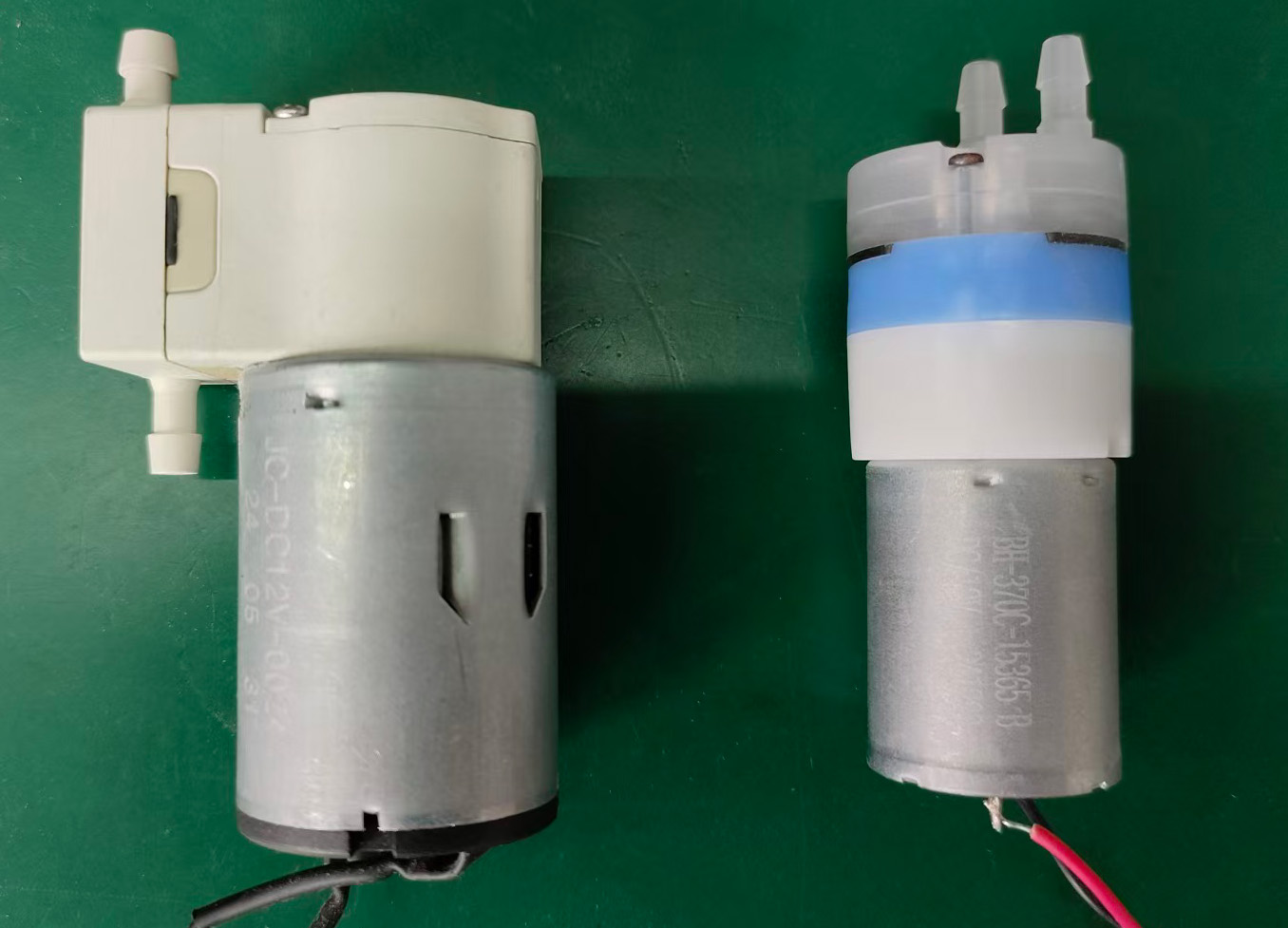
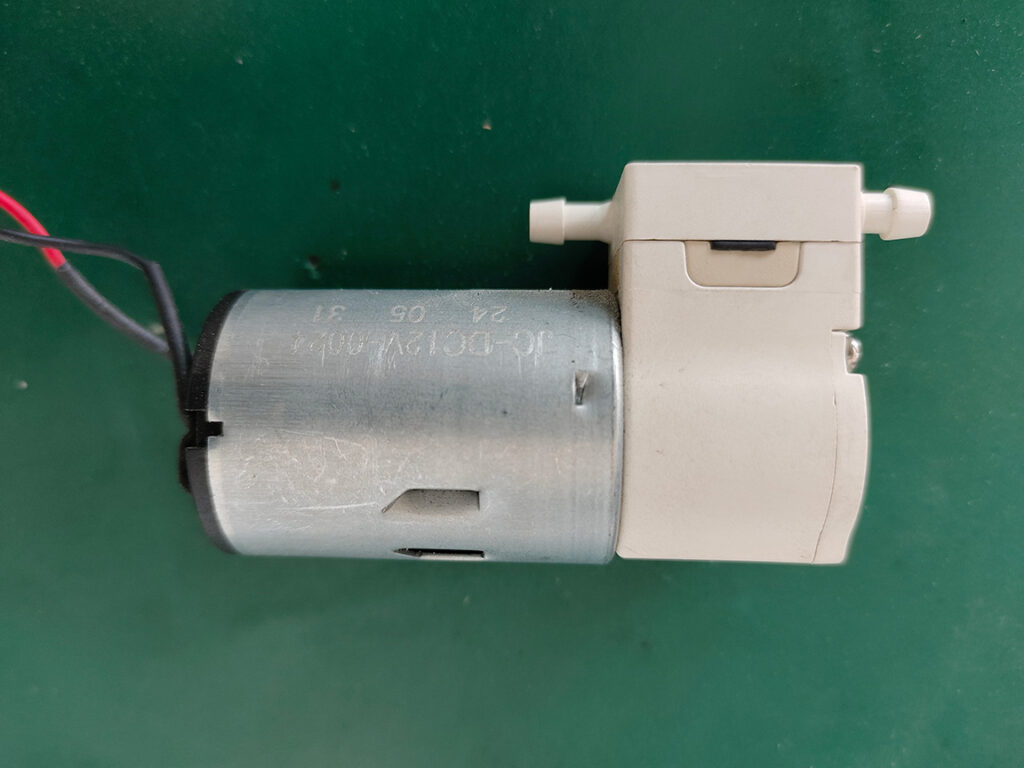
3050-Class Water Pump
Portable coffee makers commonly use a 3050-class pump when the brewing system needs to work against the resistance created by capsules or ground coffee.
Depending on the pump specification, a 3050-class configuration can provide a maximum pressure of approximately 20 bar.
Advantages:
- Better suited to capsules and compacted ground coffee;
- Better able to work against higher brewing resistance;
- More suitable for higher-performance portable coffee makers.
Disadvantage:
- Higher cost.
The pump specification should still be checked with a complete machine. A high maximum-pressure rating has little value if the water circuit leaks, the capsule is not pierced correctly or the water flow is unstable.
When evaluating a sample, check the flow rate, extraction time, crema, taste, leakage and consistency across several cups.
Low-Pressure 370-Class Water Pump
Some lower-cost portable coffee makers use a small 370-class pump. Certain low-cost configurations have a maximum pressure of around 5 bar.
Pump and motor names can vary between suppliers, so the model number should not be treated as a universal performance standard.
Advantage:
- Lower cost.
Disadvantages:
- Lower maximum pressure capacity;
- Less suitable for sealed capsules or compacted coffee;
- Water flow may slow or stop when brewing resistance increases;
- More suitable for basic low-pressure brewing products.
A low-pressure pump may move water through loosely filled ground coffee, but it can struggle when a capsule or coffee basket creates more resistance.
For this reason, the pump should be tested with the actual capsules and ground coffee intended for the target market.
Water Pump Comparison
| Item | 3050-Class Pump | Low-Pressure 370-Class Pump |
|---|---|---|
| Maximum pressure capacity | Up to approximately 20 bar, depending on specification | Around 5 bar in some lower-cost configurations |
| Performance against resistance | Better suited to capsules and compacted ground coffee | More suitable for low-resistance brewing |
| Typical application | Capsule and ground-coffee portable coffee makers | Basic low-pressure brewing products |
| Cost | Higher | Lower |
| Sample testing | Test with actual capsules and ground coffee | Test with actual capsules and ground coffee |
The current CM1001B-PLUS portable coffee maker uses a 3050-class high-pressure pump selected for capsule and ground-coffee extraction.
The machine supports Nespresso® Original-style capsules, Dolce Gusto®-style capsules and a 51 mm ground coffee basket with a capacity of approximately 15 g.
For a detailed explanation of pump pressure ratings, read What Does 20 Bar Really Mean in a Portable Coffee Maker?
3. Battery Pack
The battery does more than store energy. In a self-heating portable coffee maker, it also needs to supply a high current safely and continuously.
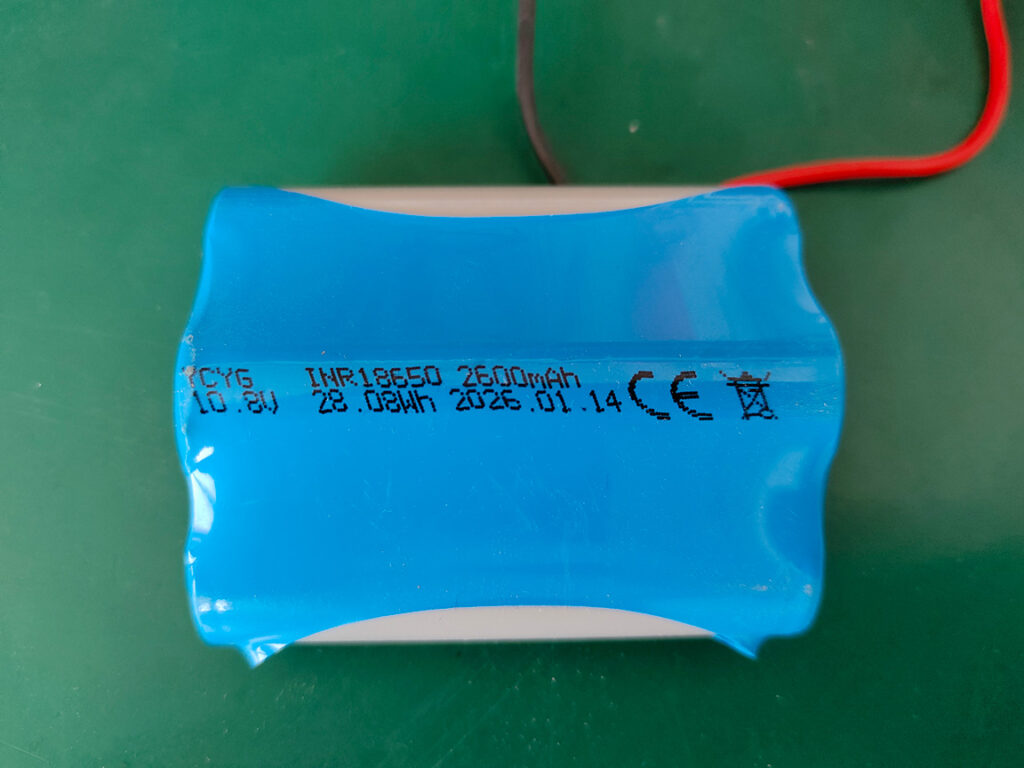
Our current portable coffee maker configuration uses three 18650 lithium-ion cells:
- Cell arrangement: 3S1P;
- Nominal voltage of each cell: 3.6 V;
- Nominal battery pack voltage: 10.8 V;
- Cell and battery pack capacity: 2,600 mAh;
- Battery pack energy: 28.08 Wh;
- Discharge rate: 5C.
Why Can’t Three Cells Be Marked as 7,800 mAh?
The three cells are connected in series.
With a series connection:
- Voltage is added;
- Capacity in mAh remains unchanged.
The calculation is:
3.6 V × 3 = 10.8 V
10.8 V × 2.6 Ah = 28.08 Wh
The correct battery specification is therefore:
10.8 V / 2,600 mAh / 28.08 Wh
It is incorrect to add the capacity of three series-connected cells and describe the battery pack as 7,800 mAh.
If three 2,600 mAh cells are connected in parallel, their combined capacity can reach approximately 7,800 mAh, but the nominal voltage would only be 3.6 V.
A genuine 10.8 V / 7,800 mAh battery pack made with 2,600 mAh cells would require nine cells in a 3S3P arrangement. It would store approximately 84.24 Wh and would be much larger, heavier and more expensive.
For this reason, Wh is often more useful than mAh when comparing battery packs with different voltages.
Why Does the Battery Discharge Rate Matter?
A 100 W heater powered by a 10.8 V battery requires a theoretical current of approximately:
100 W ÷ 10.8 V = 9.26 A
The actual current may be higher after voltage drop, conversion losses and changes in battery voltage are taken into account.
For a 2,600 mAh cell:
| Discharge Rate | Approximate Current Output | Suitable for 100 W Heating |
|---|---|---|
| 1C | 2.6 A | No |
| 3C | 7.8 A | Insufficient current or inadequate margin |
| 5C | 13 A | Suitable when the cells and protection system are correctly configured |
Two cells may both be marked as 2,600 mAh and still have very different current-output capabilities.
When a low-discharge battery is placed under excessive load, the machine may experience:
- Significant voltage drop;
- Slow or interrupted heating;
- Excessive battery temperature;
- Faster capacity loss;
- Protection-board shutdown;
- Shorter battery life.
This explains why battery packs with the same voltage and capacity can still have very different prices and performance.
When evaluating a portable coffee maker, do not check only the mAh rating. Ask about the cell capacity, continuous discharge rate, battery-management system, internal wiring and connectors.
Main Components Used in the CM1001B-PLUS
The current CM1001B-PLUS platform uses the following configuration:
| Component | Configuration |
|---|---|
| Heater | 12 V / 100 W thick-film heating system |
| Water pump | High-pressure pump configured for capsule and ground-coffee extraction |
| Battery | Three 18650 cells in a 3S1P arrangement |
| Battery specification | 10.8 V / 2,600 mAh / 28.08 Wh |
| Discharge rate | 5C |
| Water tank | 100 ml |
| Coffee formats | Nespresso® Original-style capsules, Dolce Gusto®-style capsules and ground coffee |
| Ground coffee basket | 51 mm, approximately 15 g |
This configuration costs more than a machine using a lower-cost heating film, low-pressure pump and low-discharge battery cells. The difference appears not only in the quotation but also in heating performance, extraction stability and service life.
For more information about product evaluation and purchasing options, see our portable coffee maker buying guide.
What Should Buyers Ask Before Comparing Prices?
When two similar-looking products have different prices, ask the supplier:
- What type of heating element is used?
- What are its rated voltage and power?
- How long does it take to heat a stated volume of water from a stated starting temperature?
- What pump model is used?
- Does the stated pressure refer to maximum pump pressure or actual extraction pressure?
- How many battery cells are inside the machine?
- Are the cells connected in series or parallel?
- What are the battery pack voltage, capacity and Wh?
- What is the continuous discharge rate of the cells?
- Is every finished machine checked for heating, extraction, leakage and battery operation?
Our coffee machine quality control process explains the main inspections carried out during production and before shipment.
Frequently Asked Questions
Does a 20-Bar Pump Mean Coffee Is Extracted at 20 Bar?
No. The 20-bar figure normally refers to the maximum pressure the pump can reach. Actual extraction pressure depends on coffee resistance, water flow and brewing-system design.
Is 9 Bar Enough for Coffee Extraction?
Under actual brewing conditions, stable pressure of approximately 9 bar can produce good espresso-style extraction. Pressure stability and the final coffee result matter more than the maximum advertised number.
Is a Battery Marked 7,800 mAh Always Fake?
Not necessarily. A genuine 10.8 V / 7,800 mAh battery pack is technically possible. However, using 2,600 mAh cells would normally require nine cells in a 3S3P arrangement. A 10.8 V battery pack containing only three 2,600 mAh cells cannot correctly be marked as 7,800 mAh.
Why Are 1C or 3C Batteries Unsuitable?
A 100 W heating system operating at 10.8 V requires approximately 9.3 A before losses are considered. A 2,600 mAh 1C cell provides approximately 2.6 A, while a 3C cell provides approximately 7.8 A. In a 3S1P configuration, neither provides enough continuous current and design margin for this load.
Is the Cheapest Heating Element Always a Poor Choice?
Not necessarily. Each heating solution has suitable applications. The choice should depend on heating speed, operating temperature, exposure to moisture, expected service life and product positioning—not component price alone.
Compare the Internal Configuration, Not Just the Appearance
Portable coffee maker cost is not determined by the outer housing alone.
The heater determines how quickly and efficiently the water heats. The pump affects extraction pressure and consistency. The battery determines whether the machine can supply enough current safely.
When comparing suppliers, ask for the actual component configuration and test samples using the same water volume, starting temperature and coffee conditions.
For private-label projects, component specifications can be confirmed according to the target market, performance requirements and expected order quantity. Learn more about our OEM and ODM coffee maker services.
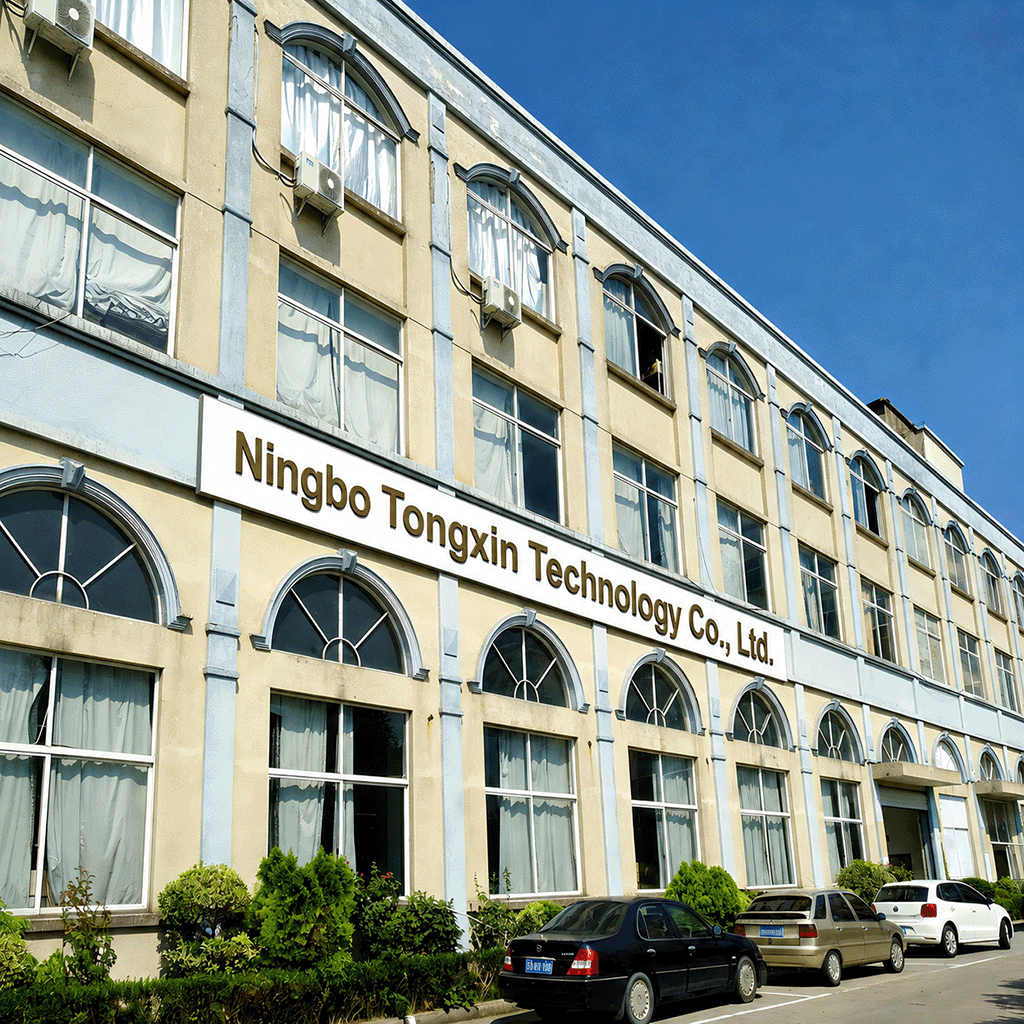
Contact Ningbo Tongxin Technology Co., Ltd. to request a CM1001B-PLUS sample, product specification or OEM quotation.
About the Author
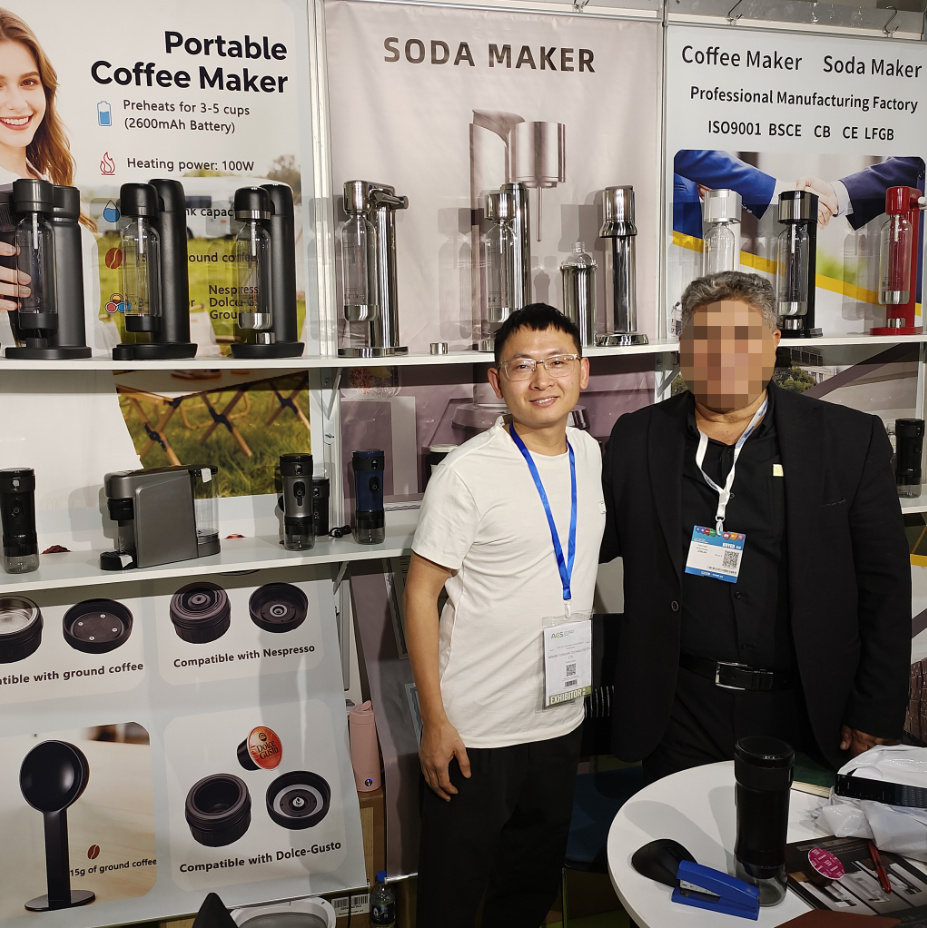
This article was written by Yong Xiong, an engineer at Ningbo Tongxin Technology Co., Ltd. He has 20 years of experience in small home appliance research and development, including 10 years focused on coffee maker development.
References to Nespresso® and Dolce Gusto® are used only to describe compatible capsule formats. The trademarks belong to their respective owners.