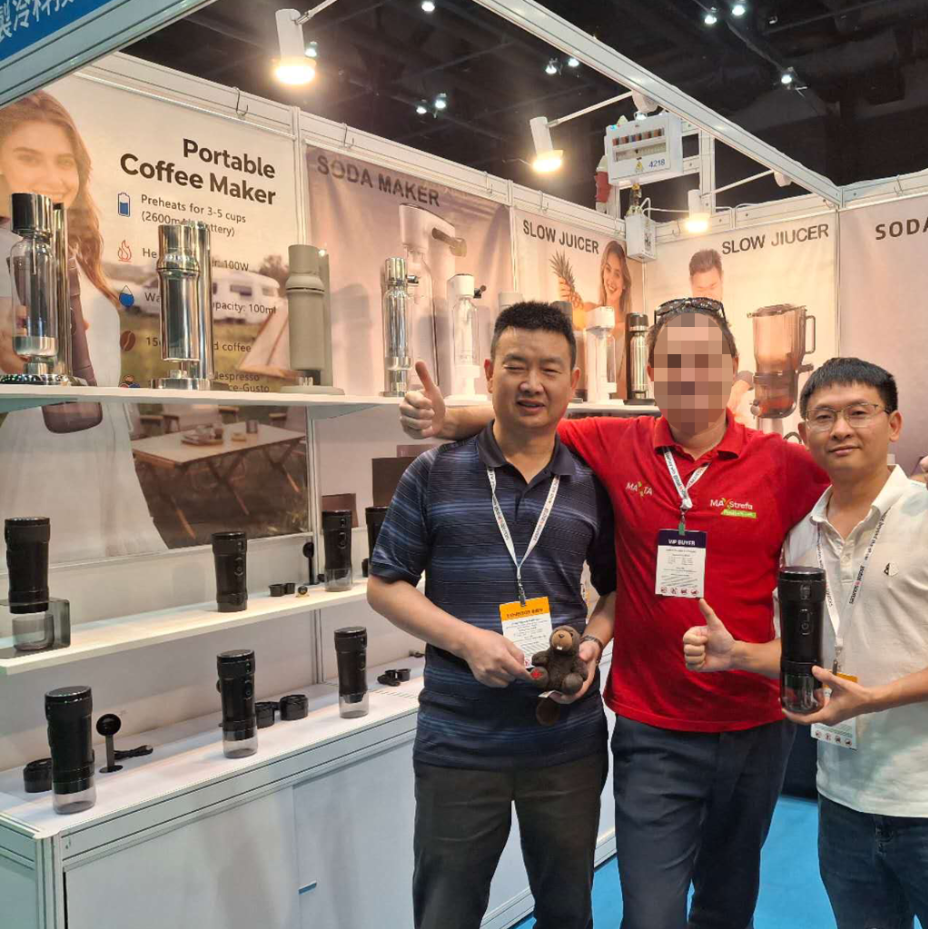

Coffee machine supply chain management coordinates product specifications, components, packaging, production, quality inspection and delivery throughout an OEM order.
Ningbo Tongxin Technology manufactures portable coffee makers and compact capsule coffee machines for international importers, distributors, retailers and private-label brands. Our order-planning process connects sales, engineering, purchasing, production, quality control, warehouse and shipping activities.We provide OEM and private-label coffee machine services covering product selection, custom branding, packaging and production support.
This guide explains the information required before production, the principal causes of delivery delays and how buyers and manufacturers can manage an international coffee machine order more effectively.
What Is Coffee Machine Supply Chain Management?
Coffee machine supply chain management covers the complete process from order evaluation to final shipment.
It may include:
- Product requirement confirmation
- Technical specification control
- Order quantity
- Material planning
- Component purchasing
- Supplier coordination
- Incoming inspection
- Production scheduling
- Assembly
- Functional testing
- Packaging preparation
- Final inspection
- Warehouse management
- Shipping documentation
- Delivery coordination
- Repeat-order planning
These activities are connected. A delay or error in one stage may affect several later stages.
For example, late packaging artwork can delay printing, packaging-material delivery, final assembly and shipment. An unconfirmed component change can affect purchasing, testing, certification documentation and production instructions.
Effective supply chain management therefore begins before materials are ordered.
Information Required Before Order Planning
A manufacturer needs clear commercial and technical information before confirming an accurate production plan.
Buyers should provide:
- Company name
- Destination country
- Sales channel
- Product model
- Order quantity
- Required voltage
- Plug type
- Product color
- Coffee-system requirements
- Logo method and position
- Retail packaging requirements
- User-manual languages
- Rating-label information
- Barcode
- Accessories
- Required compliance documents
- Inspection requirements
- Delivery destination
- Required completion date
If important requirements remain unclear, the manufacturer may be unable to confirm material cost, production time or delivery accurately.
A preliminary quotation can be prepared using estimated information, but the final order schedule should be based on confirmed specifications.
Buyers sourcing rechargeable models can read our OEM portable coffee maker manufacturer guide for information about products, samples, customization and wholesale production.
Confirming the Product Specification
The product specification is the technical foundation of an OEM order.
Our portable coffee maker range includes rechargeable self-heating models for travel, automotive, outdoor and private-label projects.For a portable coffee maker, the confirmed specification may include:
- Battery voltage and capacity
- Charging input
- Heating power
- Target water temperature
- Water-tank capacity
- Pump pressure
- Capsule compatibility
- Ground-coffee capacity
- Accessories
- Product color
- Logo
- Packaging configuration
The CM1001B-PLUS 3-in-1 portable coffee maker is an available platform for buyers requiring Nespresso® Original-style capsules, Dolce Gusto®-style capsules and ground coffee.
Buyers can also explore our capsule coffee machine range for compact home, office, hotel and retail applications.
For a countertop capsule coffee machine, it may include:
- Rated voltage and frequency
- Heating power
- Plug and power cord
- Pump pressure
- Water-tank capacity
- Beverage-volume settings
- Capsule holders
- Ground-coffee holder
- Product color
- Accessories
The CM2001 3-in-1 capsule coffee maker can be evaluated for buyers requiring a compact countertop model compatible with capsules and ground coffee.
The confirmed specification should be consistent across:
- Purchase order
- Proforma invoice
- Approved sample
- Bill of Materials
- Production instructions
- Inspection requirements
- Packaging
- User manual
- Rating label
Conflicting information should be resolved before purchasing and production begin.
For countertop projects, our capsule coffee machine manufacturer guide explains capsule compatibility, OEM branding, compliance and supplier evaluation.
Sample Approval Before Mass Production
Sample evaluation helps the buyer and manufacturer establish a physical reference for the order.
The buyer may evaluate:
- Product appearance
- Dimensions and weight
- Product functions
- Heating
- Pump operation
- Coffee extraction
- Capsule compatibility
- Ground-coffee operation
- Battery and charging
- Water leakage
- Buttons and indicator lights
- Accessories
- Packaging structure
A standard sample is normally used to evaluate the existing product.
If the order includes customized colors, logos, accessories or technical changes, a customized or pre-production sample may be required.
Sample approval does not replace written specifications. Both the approved sample and final documents should be used as production references.
Managing Engineering Changes
Changes made after an order is confirmed can affect cost, materials, production and delivery.
Examples include:
- Changing the product color
- Moving or resizing the logo
- Adding an accessory
- Changing the battery
- Changing the heating temperature
- Modifying a capsule holder
- Changing packaging dimensions
- Adding a manual language
- Changing a rating label
- Changing the plug or power cord
Before accepting a change, the manufacturer should evaluate:
- Technical feasibility
- Material availability
- Tooling requirements
- Compliance implications
- Additional cost
- Sample requirements
- Effect on production
- Effect on delivery
A confirmed change should be recorded in a revised specification, drawing, artwork or order document.
Verbal instructions and informal images should not be used as the only production reference.
Major structural or technical changes may require a new portable coffee maker design verification process before mass production.
Material Planning and Purchasing
After specifications are confirmed, the purchasing team prepares materials according to the production plan and approved Bill of Materials.
Coffee machine components may include:
- Product housings
- Water tanks
- Heating modules
- Pumps
- Batteries
- Control boards
- Wiring
- Seals
- Tubes
- Switches
- Indicator components
- Capsule holders
- Ground-coffee baskets
- Power cords
- Chargers or charging cables
- Accessories
- Packaging materials
Material lead times vary.
Standard components may be available relatively quickly, while custom colors, printed packaging, batteries, electronic components or special accessories may require more time.
Before confirming delivery, the manufacturer should consider both production time and component lead time.
Incoming Material Inspection
Materials should be checked before entering production.
Incoming inspection may cover:
- Material name and identification
- Quantity
- Packaging condition
- Appearance
- Color
- Dimensions
- Surface treatment
- Assembly fit
- Electrical specifications
- Basic functions
- Batch information
- Supplier documentation
Important components such as pumps, heating modules, batteries, control boards, seals and coffee holders may require additional testing.
Nonconforming materials should be identified and separated from approved materials. The relevant teams then evaluate whether the materials should be returned, sorted, corrected or replaced.
Finding a problem during incoming inspection is generally less disruptive than discovering it after complete product assembly.
Learn more about our coffee machine quality control process, including material validation, incoming inspection, first-article approval, functional testing and final inspection.
Packaging and Artwork Coordination
Customized packaging is often on the critical path of an OEM coffee machine order.
Packaging preparation may include:
- Retail box design
- Product images
- Brand logo
- Technical specifications
- Product features
- Coffee compatibility
- Package contents
- Barcode
- Safety information
- Importer information
- User manual
- Rating label
- Outer-carton shipping marks
The buyer is normally responsible for confirming brand information, translations, barcodes and market-specific text.
The manufacturer should verify that:
- Product images correspond with the ordered model
- Specifications match the actual machine
- Accessories shown are included
- Operating instructions are correct
- Artwork dimensions match the packaging structure
- The latest approved file is used
- The barcode is provided in a usable format
Packaging materials should not be printed until the final artwork is approved.
Late artwork confirmation is one of the most common causes of OEM production delays.
Production Scheduling
Production scheduling begins after critical materials and order information are confirmed.
Buyers can review our coffee machine manufacturing capabilities to understand how product evaluation, component sourcing, assembly and testing are coordinated.
The production plan may consider:
- Order quantity
- Material arrival dates
- Product model
- Assembly complexity
- Available production capacity
- Testing time
- Packaging requirements
- Inspection arrangements
- Required completion date
- Other confirmed orders
A realistic schedule should include time for:
- Material verification
- First-article inspection
- Assembly
- Functional testing
- Correction of identified problems
- Packaging
- Final inspection
- Shipment preparation
A schedule that includes only assembly time does not represent the complete order process.
First-Article Inspection
Before mass production begins, the first completed unit should be inspected.
The first-article inspection helps confirm:
- Correct materials
- Correct component versions
- Assembly method
- Product appearance
- Product color
- Logo
- Electrical functions
- Heating
- Pump operation
- Extraction
- Water sealing
- Accessories
- Labels
- Packaging requirements
If a problem is discovered, it should be corrected before mass production continues.
This prevents the same mistake from affecting an entire order.
Production and Functional Testing
During mass production, assembly and testing should follow the approved product requirements.
Production checks may cover:
- Component installation
- Wiring
- Screws and fasteners
- Water-path connections
- Seals
- Buttons
- Indicator lights
- Product appearance
- Logo application
Functional testing may include:
- Power-on operation
- Battery charging
- Water heating
- Pump operation
- Water flow
- Coffee extraction
- Capsule-holder installation
- Ground-coffee holder installation
- Water leakage
- Abnormal noise
Ningbo Tongxin Technology performs 100% inspection before shipment according to the confirmed product and order requirements.
Products that do not meet the requirements must be separated, corrected and inspected again.
Coordination Between Departments
Coffee machine supply chain management requires information to move accurately between several teams.
Sales Team
The sales team communicates with the customer and records the confirmed commercial, product, artwork and delivery requirements.
Engineering Team
The engineering team evaluates technical specifications, drawings, components, product changes and sample requirements.
Purchasing Team
The purchasing team orders components and packaging according to the approved Bill of Materials, drawings and production plan.
Quality Team
The quality team conducts incoming inspection, process inspection, functional testing and final outgoing inspection.
Production Team
The production team arranges assembly, testing, correction and packaging according to the confirmed instructions.
Warehouse Team
The warehouse team controls incoming materials, approved components, finished products and shipment preparation.
Shipping Team
The shipping team coordinates packing information, shipping documents and delivery arrangements.
Each team needs access to the correct version of the order information. A change that reaches only one department can create inconsistencies.
Final Inspection Before Shipment
After production and packaging are completed, the finished order should undergo final inspection.
The inspection may cover:
- Product model
- Product color
- Order quantity
- Product appearance
- Basic functions
- Logo
- Rating label
- Accessories
- User manual
- Retail packaging
- Barcode
- Carton quantity
- Shipping marks
- Packaging protection
Shipment should be arranged only after the products correspond with the confirmed order requirements.
If the customer requires a third-party inspection, the inspection method, sample size, timing and responsible party should be agreed before production is completed.
Shipping Documents and Delivery Preparation
International orders may require documents such as:
- Commercial invoice
- Packing list
- Bill of lading
- Certificate of Origin
- Customs declaration documents
- Product documentation
- Battery transport documents
The exact document requirements depend on the product, shipping method, destination country and customer.
Before shipment, buyers should confirm:
- Company and consignee information
- Delivery address
- Product description
- Quantities
- Shipping marks
- Required document originals
- Required draft approval
- Freight arrangement
Document discrepancies can delay customs clearance even when production has been completed on time.
Managing Urgent Orders
Urgent orders require early and accurate evaluation.
Before accepting a shortened schedule, the manufacturer should confirm:
- Whether the product specification is finalized
- Whether materials are available
- Whether custom packaging is required
- Whether artwork is approved
- Whether production capacity is available
- Whether inspection can be completed
- Whether the shipping schedule is realistic
Possible options may include:
- Using available standard components
- Using generic packaging
- Reducing nonessential customization
- Confirming artwork earlier
- Separating production batches
- Arranging partial shipment
- Selecting a faster shipping method
These options depend on the actual project and should not be promised before evaluation.
An unrealistic delivery commitment can create quality risks and additional costs. The correct approach is to identify the critical requirements and confirm which schedule is technically achievable.
Common Causes of Coffee Machine Order Delays
Common causes include:
- Incomplete product specifications
- Late sample approval
- Late packaging artwork
- Incorrect artwork dimensions
- Unconfirmed translations
- Component changes
- Custom-color material lead time
- Packaging supplier delays
- Failed incoming inspection
- First-article problems
- Additional customer testing
- Late third-party inspection booking
- Shipping-document changes
- Public holidays
- Freight schedule changes
Some delays are outside the manufacturer’s direct control, while others can be reduced through earlier confirmation and clearer project management.
How Buyers Can Reduce Delivery Risks
Buyers can help reduce order delays by:
- Providing complete requirements at the beginning
- Testing samples early
- Confirming the final product configuration
- Preparing packaging artwork in advance
- Checking translations carefully
- Providing barcodes and importer information
- Avoiding late technical changes
- Confirming inspection requirements
- Reserving time for corrections
- Confirming shipping documents before dispatch
A clear approval schedule should identify who is responsible for each item and when confirmation is required.
Repeat-Order Supply Management
Repeat orders may be faster to prepare because the product configuration, packaging and production records already exist.
However, the manufacturer and buyer should still reconfirm:
- Product model
- Component version
- Order quantity
- Product color
- Logo
- Artwork version
- Manual version
- Rating label
- Barcode
- Accessories
- Compliance requirements
- Delivery schedule
Using the wrong artwork version or an outdated specification can create problems even when the same product was ordered previously.
Repeat-order management should therefore combine previous records with a new order confirmation.
Frequently Asked Questions
When does the production lead time begin?
The production lead time is normally confirmed after payment, final product specifications and required packaging artwork have been approved. The exact starting point should be stated in the order agreement.
Can production begin before packaging artwork is ready?
Component preparation may sometimes begin, but complete production and packing can be delayed if customized packaging, manuals or labels are not approved.
Can an urgent order be accepted?
Urgent orders can be evaluated according to material availability, production capacity, artwork status, inspection requirements and the requested completion date.
Can generic packaging reduce the preparation time?
Generic packaging may reduce artwork and printing time for eligible trial orders, subject to the selected model and available packaging.
Can buyers arrange third-party inspection?
Yes. Third-party inspection can be discussed before order confirmation. The inspection standard, timing and responsible party should be agreed in advance.
Do you inspect every coffee machine?
Yes. Ningbo Tongxin Technology performs 100% inspection before shipment according to the confirmed product and order requirements.
What information is required for an OEM order?
Buyers can request an OEM coffee machine quotation after providing the model, quantity, target market, voltage, plug, color, logo, packaging, manual, compliance and delivery requirements.
Are repeat orders automatically identical to the previous order?
No. Specifications, artwork versions, labels, accessories and delivery requirements should be reconfirmed for every repeat order.
Discuss Your OEM Coffee Machine Order
Effective coffee machine supply chain management begins with clear requirements, controlled specifications and realistic order planning.
Ningbo Tongxin Technology supports international buyers with portable coffee makers, capsule coffee machines, product samples, OEM branding, packaging coordination, quality control and production planning.
Request a sample or production quotation with your company name, target country, product model, estimated quantity, customization requirements and required delivery date.
Company Information
Company: Ningbo Tongxin Technology Co., Ltd.
Main Products: Portable Coffee Makers, Capsule Coffee Machines, and Home Coffee Machines
Services: OEM, ODM, Wholesale, and Private-Label Manufacturing
Address: No. 17 West Street, Industrial Park West Area, Guanhaiwei Town, Cixi, Ningbo, Zhejiang, China
Website: www.coffeemachinefactory.com
Email: simonxiong@coffeemachinefactory.com