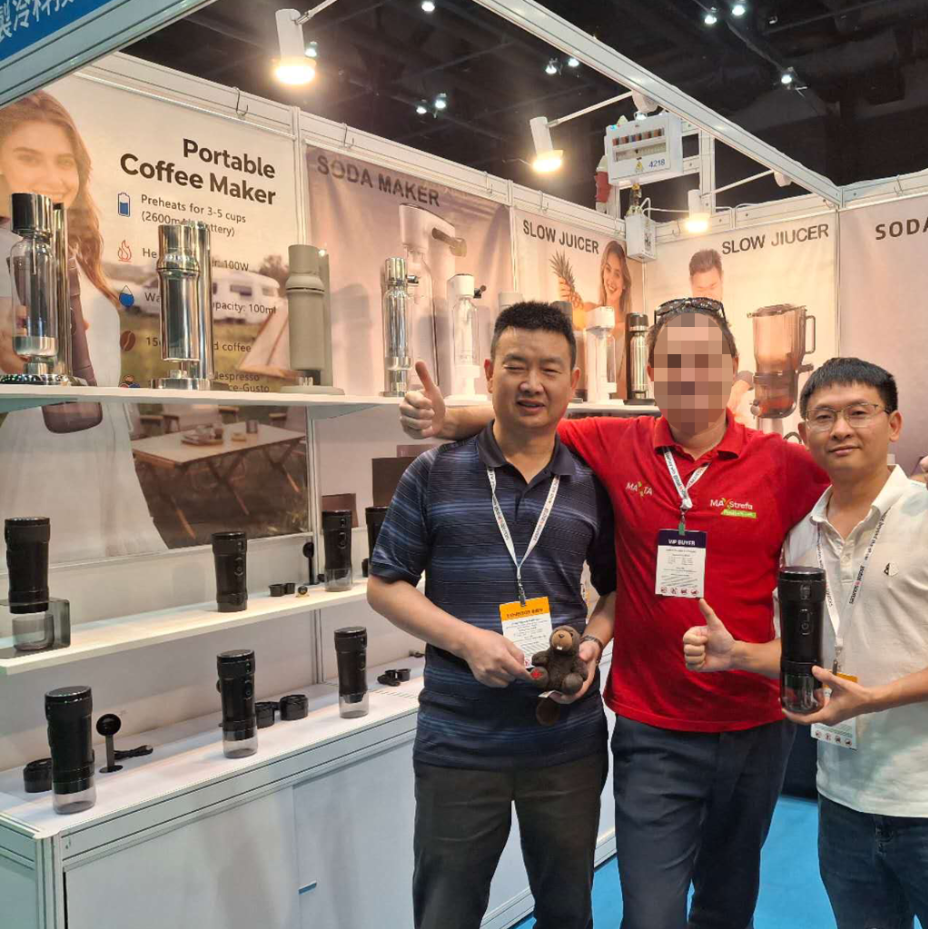

Ningbo Tongxin Technology supported a European customer in developing a private-label portable coffee maker based on the CM1001B-PLUS platform. The customer’s first order was 2,000 units, with customized product logos, retail packaging and user manuals.
After completing the first project, the customer placed a repeat order for 4,000 units. This portable coffee maker case study explains the product selection, customization, sample approval, production and quality-control process behind the two orders.
The customer’s name and brand are not disclosed for commercial confidentiality.
Customer Requirements for the Private-Label Project
The customer wanted to sell a rechargeable portable coffee maker under its own brand in the European market. Instead of developing a completely new machine, the customer needed an existing product platform that could be customized and prepared for retail distribution.
The main project requirements included:
- Rechargeable and cordless operation
- Built-in water heating
- Compatibility with multiple coffee formats
- Customized product logo
- Customized retail packaging
- Customized user manual
- Stable mass-production quality
- Product and battery compliance documentation
- Support for future repeat orders
An existing platform was more practical for this project because it reduced the tooling investment and development time required for a completely new coffee maker.
Selecting the CM1001B-PLUS Portable Coffee Maker
After reviewing the customer’s requirements, we selected the CM1001B-PLUS 3-in-1 portable coffee maker as the base model.
The CM1001B-PLUS is compatible with:
- Nespresso® Original-style capsules
- Dolce Gusto®-style capsules
- Ground coffee
Its standard configuration includes a rechargeable 10.8V/2,600mAh battery, a 12V/100W heating system, a 20-bar pump and a 100ml water tank. It can heat cold water inside the machine and can also extract coffee directly when prepared hot water is added.
The 3-in-1 system allows customers to offer several brewing options through one portable product. The machine is suitable for travel, camping, driving, offices, hotels and other situations where a conventional countertop coffee machine may not be available.
Before confirming production, the customer evaluated the product and compared it with the requirements for its private-label portable coffee maker project.
First Order: 2,000 Customized Units
After evaluating the product, the customer placed an initial order for 2,000 units.
The first order included three main private-label requirements:
- Customized product logo
- Customized retail packaging
- Customized user manual
These requirements allowed the customer to sell the coffee maker under its own brand while using the established CM1001B-PLUS product platform.
The confirmed customization did not require the development of a completely new machine. However, the logo, packaging and manual still required careful preparation and approval before mass production.
Customized Product Logo
The customer’s logo had to be positioned correctly on the coffee maker and remain clear and consistent during production.
Before applying the logo to the complete order, the project team needed to confirm:
- Logo artwork format
- Logo dimensions
- Logo position
- Printing or engraving method
- Logo color and appearance
- Orientation on the product
- Consistency with the retail packaging
A logo sample or pre-production confirmation helps avoid mistakes involving size, direction, color or placement.
The approved logo requirements were then used as the standard for mass production and final inspection.
Customized Retail Packaging
The customer also required private-label retail packaging for the first 2,000-unit order.
Packaging development covered the presentation of the product and the information required for the customer’s market. The artwork preparation included relevant elements such as:
- Customer brand and logo
- Product name
- Product images
- Main product features
- Product specifications
- Package contents
- Operating information
- Safety information
- Barcode and product identification
- Manufacturer or importer information, where required
Before printing the packaging materials, the customer needed to confirm the final artwork, text, colors and layout.
The packaging also had to provide suitable protection during transportation. Product presentation and transport protection were therefore both considered during the packaging confirmation process.
Customized User Manual
The user manual was prepared according to the customer’s branding and product requirements.
A portable coffee maker manual should clearly explain:
- Product components
- Charging instructions
- Cold-water heating operation
- Hot-water extraction operation
- Capsule installation
- Ground-coffee preparation
- Cleaning and maintenance
- Safety warnings
- Battery precautions
- Troubleshooting
- Product specifications
The model, accessories and operating instructions shown in the manual must match the product supplied in the order. Incorrect images, specifications or operating steps can lead to customer confusion and after-sales problems.
The customer reviewed the manual artwork before it entered mass production.
Sample and Artwork Approval
Sample evaluation and artwork approval were important steps before producing the 2,000-unit order.
The approval process covered the standard machine as well as the customized branding materials. Depending on the project stage, the customer reviewed:
- Product appearance
- Product functions
- Capsule compatibility
- Ground-coffee operation
- Heating and extraction
- Logo appearance and position
- Packaging artwork
- User-manual content
- Product labels
- Accessories and package contents
Production was arranged according to the confirmed product specification and approved artwork.
This process created a clear reference for purchasing, production, quality control and final packing.
Production of the First 2,000 Units
After the product details and artwork were confirmed, the first 2,000-unit order entered production.
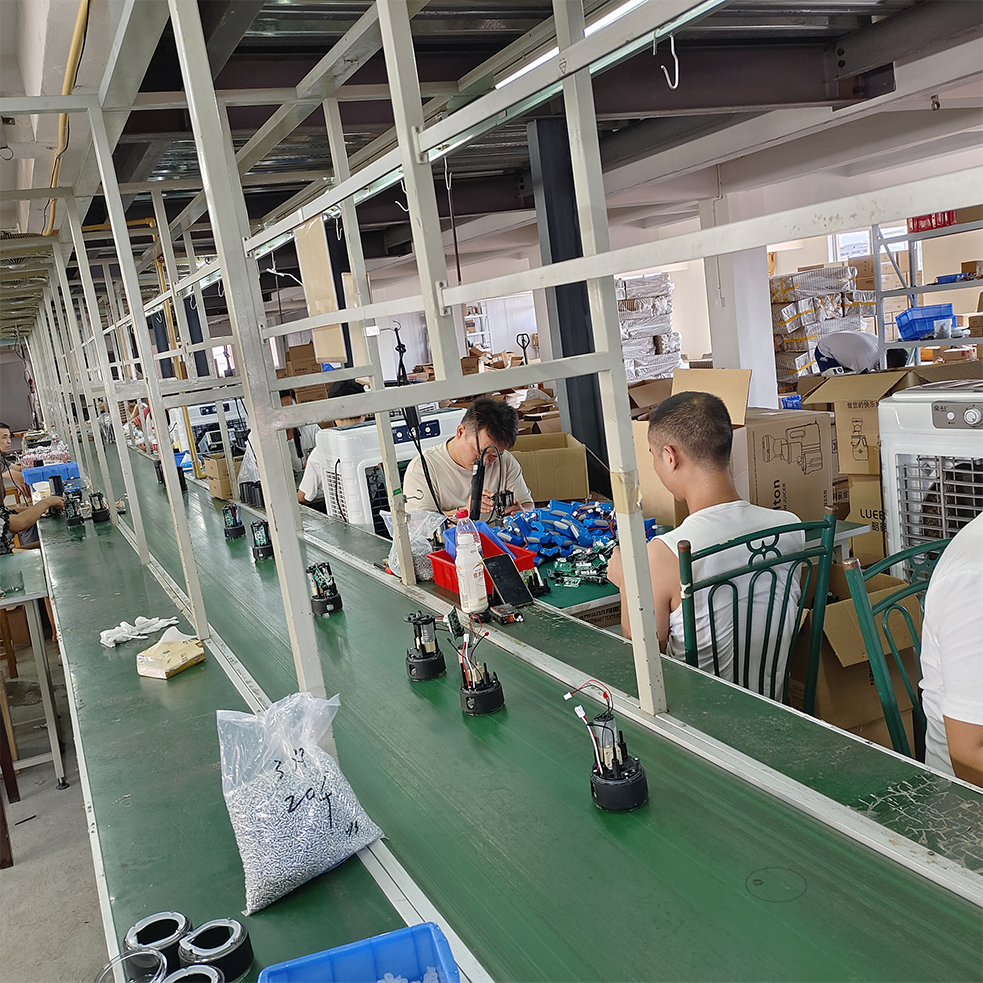
The manufacturing process included component preparation, assembly, functional testing, appearance inspection and packaging.
For the CM1001B-PLUS, production checks may cover:
- Heating-module operation
- Pump and water-flow operation
- Battery and charging function
- Control button and indicator function
- Coffee extraction
- Water leakage
- Capsule-holder installation
- Ground-coffee basket fitting
- Product appearance
- Logo position and quality
- Accessories
- Packaging and user manual
Products that did not meet the confirmed requirements needed to be separated, corrected and inspected again before packing.
Quality Control Before Shipment
Coffee machine quality control cannot rely on packaging inspection alone. The product’s water system, heating system, extraction function and battery operation must also be checked.
The quality-control process for the project included relevant stages such as:
- Incoming component inspection
- Assembly-process inspection
- Product function testing
- Heating and extraction checks
- Water-leakage inspection
- Appearance and logo inspection
- Accessory verification
- Packaging verification
- Final inspection before shipment
Learn more about the design verification procedures used to evaluate portable coffee maker performance and reliability.
Ningbo Tongxin Technology performs 100% inspection before shipment according to the confirmed product and order requirements.
For customized production, inspectors also verify that the product logo, packaging, manual and accessories correspond with the approved artwork and order specification.
Repeat Order: 4,000 Units
After the first 2,000-unit project, the customer placed a repeat order for 4,000 units.
The repeat order was twice the quantity of the initial order and used the established product and private-label configuration.
Because the product, logo, packaging and manual specifications had already been established during the first project, the confirmed materials could be used as the reference for repeat-order preparation.
Before repeat production, it was still necessary to reconfirm:
- Order quantity
- Product configuration
- Logo requirements
- Packaging artwork version
- User-manual version
- Product labels
- Accessories
- Delivery requirements
Previous approval does not mean that repeat production should begin without verification. Artwork versions, product information and order details should be checked again to prevent the use of outdated or incorrect files.
What the 4,000-Unit Repeat Order Demonstrates
The repeat order is a factual and measurable project result.
It shows that the customer proceeded from an initial 2,000-unit private-label order to a second order of 4,000 units using the same product platform and customized branding system.
However, a manufacturer should not make unsupported claims about the customer’s retail sales, market share or commercial performance. Those results belong to the customer and should only be published when verified and authorized.
For this case study, the confirmed result is:
- Initial order: 2,000 units
- Repeat order: 4,000 units
- Total confirmed quantity: 6,000 units
This provides potential buyers with a concrete example of how an initial OEM coffee maker project can progress into a larger repeat order.
Benefits of Using an Existing Product Platform
This project did not require the customer to develop a completely new portable coffee maker.
Using the CM1001B-PLUS platform provided several practical benefits:
- Lower development risk
- No complete product tooling investment
- Faster project evaluation
- Existing heating and extraction system
- Multiple coffee-format compatibility
- Sample testing before bulk production
- Customized brand presentation
- Clearer production specifications
- Easier repeat-order preparation
For importers and brands, this approach can be more efficient than starting with a completely new mechanical and electrical design.
Customers that require special structures, new functions, exclusive molds or major electrical changes would need a separate ODM development evaluation.
OEM and Private-Label Support
Ningbo Tongxin Technology provides OEM and private-label coffee maker services for importers, distributors, retailers and brands.
Available customization options may include:
- Product logos
- Product colors
- Retail packaging
- User manuals
- Rating labels
- Barcodes
- Accessories
- Carrying bags for selected models
- Outer-carton marks
- Product configuration evaluation
The standard MOQ for a fully customized OEM order is generally 1,000 units. Special colors, accessories, structures or technical changes may require different quantities and additional development costs.
Buyers should provide their target country, sales channel, estimated quantity and customization requirements before requesting a final quotation.
Buyers looking for countertop products can also explore our capsule coffee machine range for home, office, hotel and retail projects.
Compliance and Factory Management
Ningbo Tongxin Technology operates under an ISO 9001 quality management system and has passed a BSCI social compliance audit.
Depending on the selected model, available product and battery documents may include:
- CE-EMC
- RoHS
- LFGB
- UN38.3
- MSDS
The exact compliance requirements must be evaluated according to the destination country, product configuration and sales channel.
Changes to electrical components, batteries, materials or product construction may affect the applicability of existing reports. Buyers should confirm their requirements before placing an order.
Lessons for Private-Label Coffee Maker Buyers
This European private-label project provides several practical lessons for other buyers.
First, sample evaluation should be completed before a bulk order. Product functions, coffee compatibility and user experience should be checked using the intended capsules and coffee.
Second, packaging and manual artwork must match the actual product. Images, specifications, accessories and operating instructions should be reviewed carefully.
Third, every approved file should have a clear version. This is especially important when moving from the first order to repeat production.
Fourth, private-label buyers should evaluate the complete project cost, not only the unit price. Samples, packaging, manuals, labels, compliance requirements and shipping can all affect the final purchasing cost.
Finally, repeat orders still require specification verification. Previous production records provide a useful reference, but the customer and manufacturer should reconfirm the final requirements for every order.
Frequently Asked Questions
Can I order a sample before starting an OEM project?
Yes. Buyers can request a CM1001B-PLUS sample to evaluate product appearance, heating, extraction, coffee compatibility and operation before confirming a wholesale or customized order.
What is the standard OEM MOQ?
The standard MOQ for customized logos, retail packaging and user manuals is generally 1,000 units. Requirements may vary according to the model and customization details.
Can you customize the product logo?
Yes. Logo options can be evaluated according to the product surface, required position, artwork and production quantity.
Can you provide customized packaging and manuals?
Yes. We support customized retail packaging and user manuals. Final artwork must be reviewed and approved before printing and production.
Does the CM1001B-PLUS heat cold water?
Yes. The CM1001B-PLUS contains a rechargeable battery and a built-in water-heating system. It can also use prepared hot water for direct extraction.
Which coffee formats does the CM1001B-PLUS support?
It supports Nespresso® Original-style capsules, Dolce Gusto®-style capsules and ground coffee.
Do you inspect every machine before shipment?
Yes. Each unit is inspected before shipment according to the confirmed product and order requirements.
What information is needed for a quotation?
Please provide your company name, target country, sales channel, required model, estimated quantity, logo requirements, packaging requirements and delivery destination.
Start Your Private-Label Portable Coffee Maker Project
The European customer in this case started with a 2,000-unit private-label order and later placed a 4,000-unit repeat order.
Ningbo Tongxin Technology supports international buyers with product samples, OEM logos, customized packaging, user manuals, quality control and repeat-order production.
Contact our team with your target market, estimated quantity and customization requirements. We will recommend a suitable product configuration and prepare a sample or quotation for your project.
Company Information
Company: Ningbo Tongxin Technology Co., Ltd.
Main Products: Portable Coffee Makers, Capsule Coffee Machines, and Home Coffee Machines
Services: OEM, ODM, Wholesale, and Private-Label Manufacturing
Address: No. 17 West Street, Industrial Park West Area, Guanhaiwei Town, Cixi, Ningbo, Zhejiang, China
Website: www.coffeemachinefactory.com
Email: simonxiong@coffeemachinefactory.com